01 · Intent
The best session ends with the screen face-down.
Most children's products treat attention as the outcome: a longer session looks better on a dashboard. Poing begins with the opposite ambition. Its proposed north-star measure is offline play generated per minute of screen time.
The screen acts as a launchpad and lightweight referee, then recedes. A successful session leaves children moving through the room, negotiating rules, and inventing something with another person.
02 · Setup
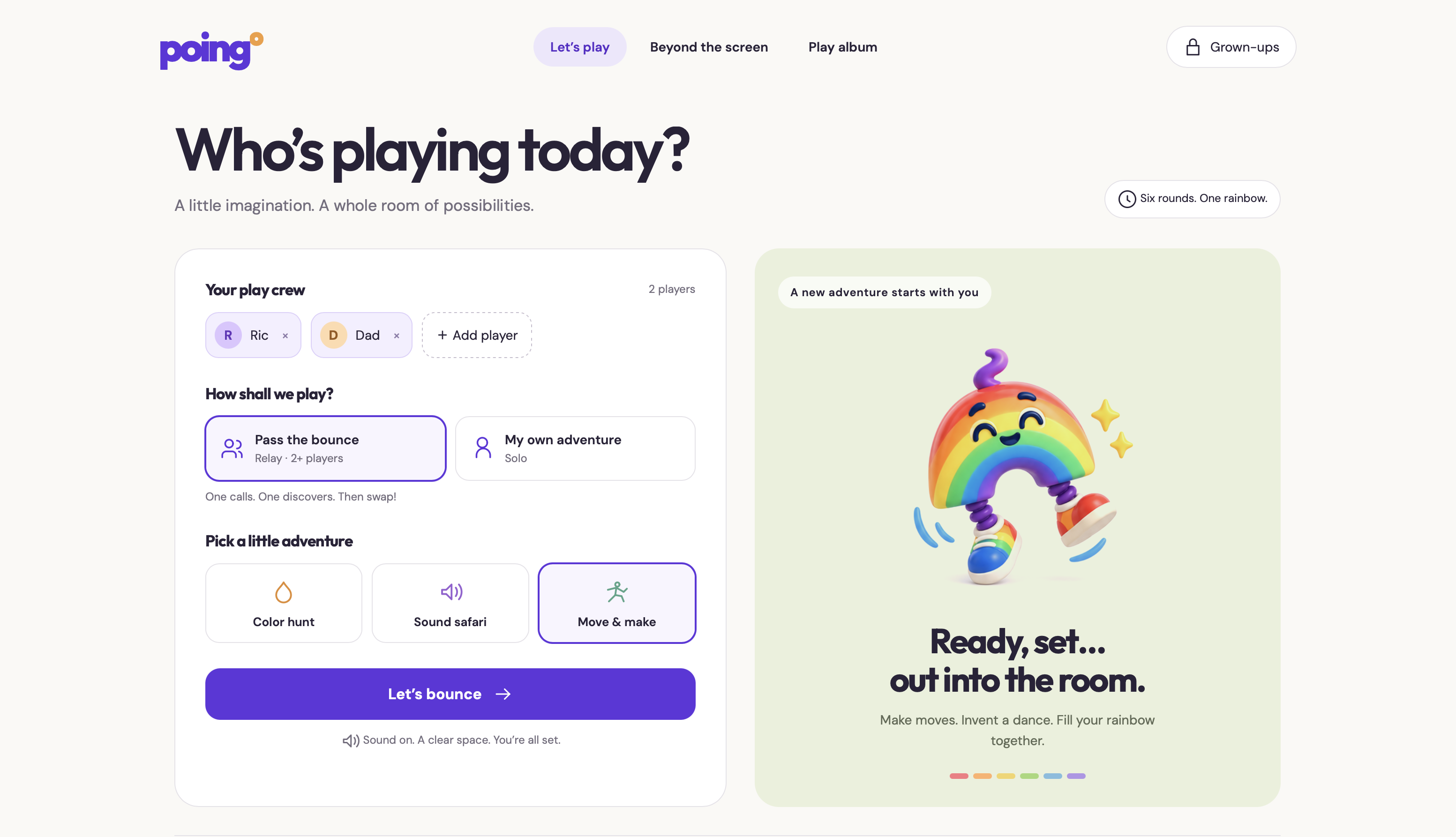
Three small decisions create a play session that belongs to the people in the room.
Setup asks who is playing, whether the experience will be a shared relay or a solo adventure, and what kind of activity should begin: a color hunt, a sound safari, or movement and making.
The adult is not outside the experience. In activities such as Move & Make, the grown-up becomes a game piece too, turning imitation, movement, and shared silliness into the material of play.
03 · Play loop
A few legible rules make the room the game board.
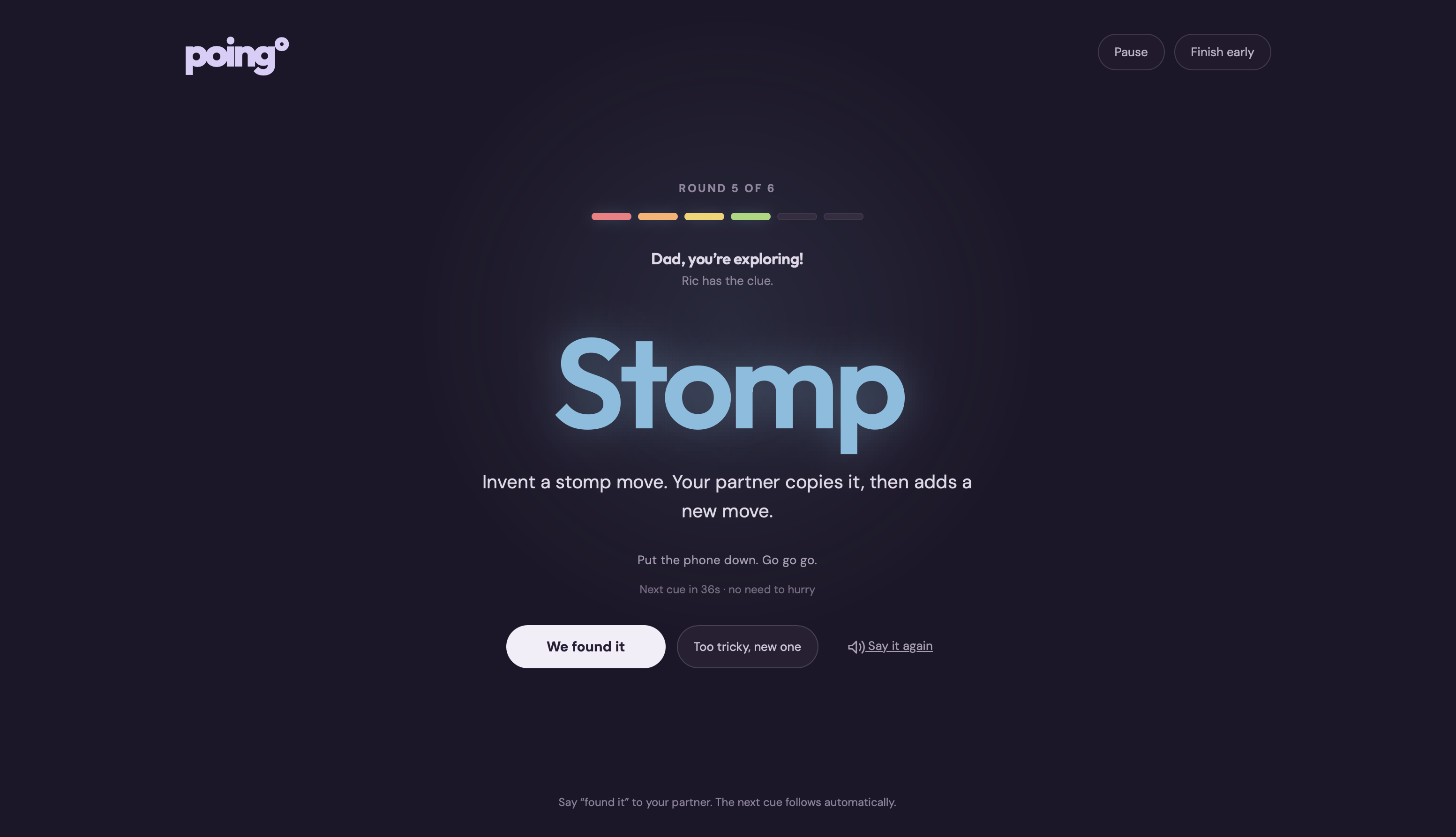
Each round names the caller and explorer, presents a color, sound, or action, and keeps a quiet clock underneath. The timer moves the system forward without telling children to hurry.
Confirmation stays intentionally simple: players say they found it, then the next cue follows. Separate actions for repeating a prompt and replacing one distinguish between needing another beat and needing a different challenge, while one rainbow stripe per round carries all the progress feedback.
04 · Handoff
The final round deliberately hands the game back to the people playing it.
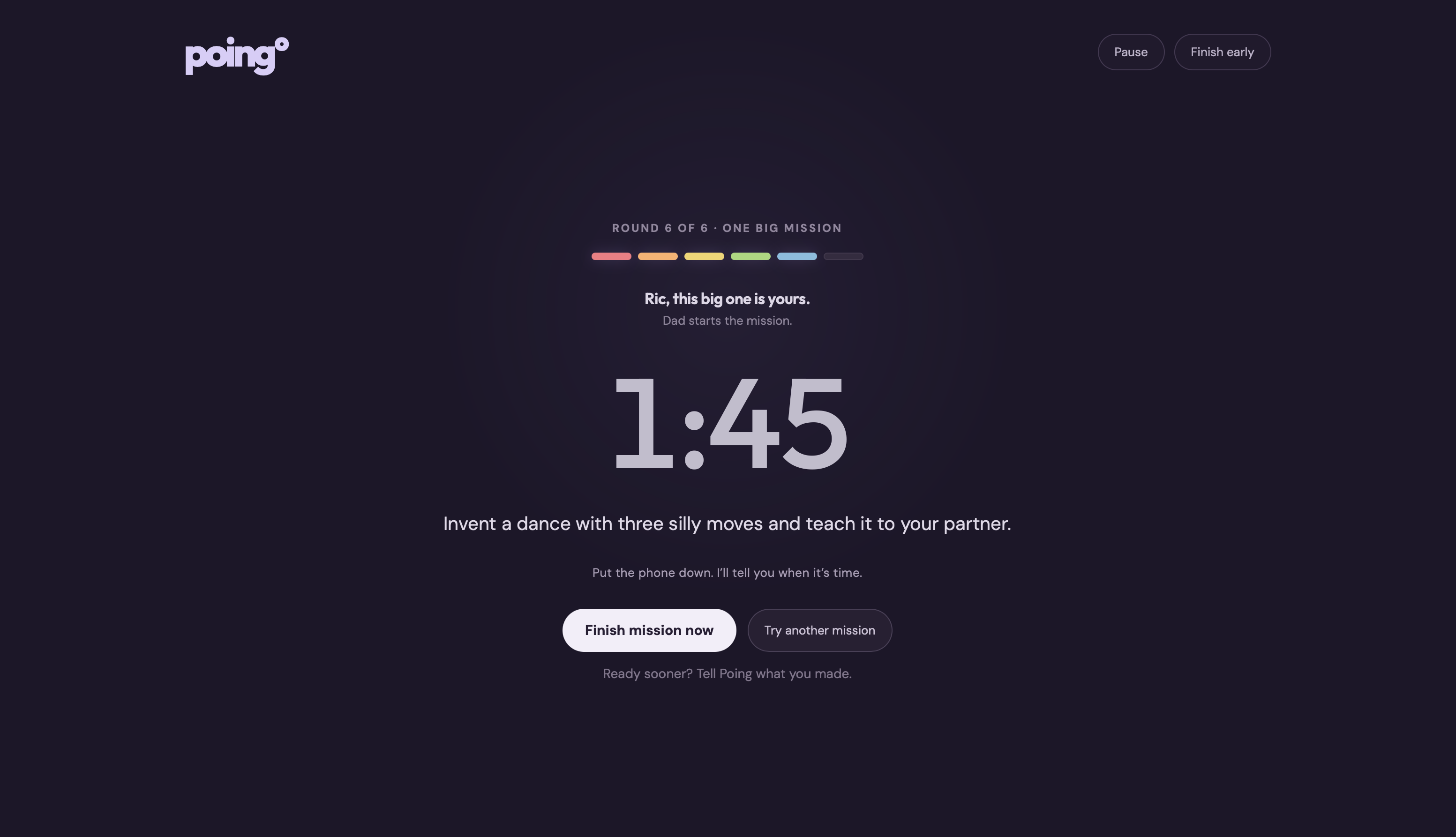
After five quick rounds, the sixth becomes one open-ended mission. Poing starts a two-minute countdown and explicitly asks players to put the screen down, promising to tell them when it is time to return.
When the mission ends, the product asks what they created. A typed or spoken answer becomes the name and story of that session's creature, preserving something a child actually made instead of awarding a generic digital badge.
05 · Family system
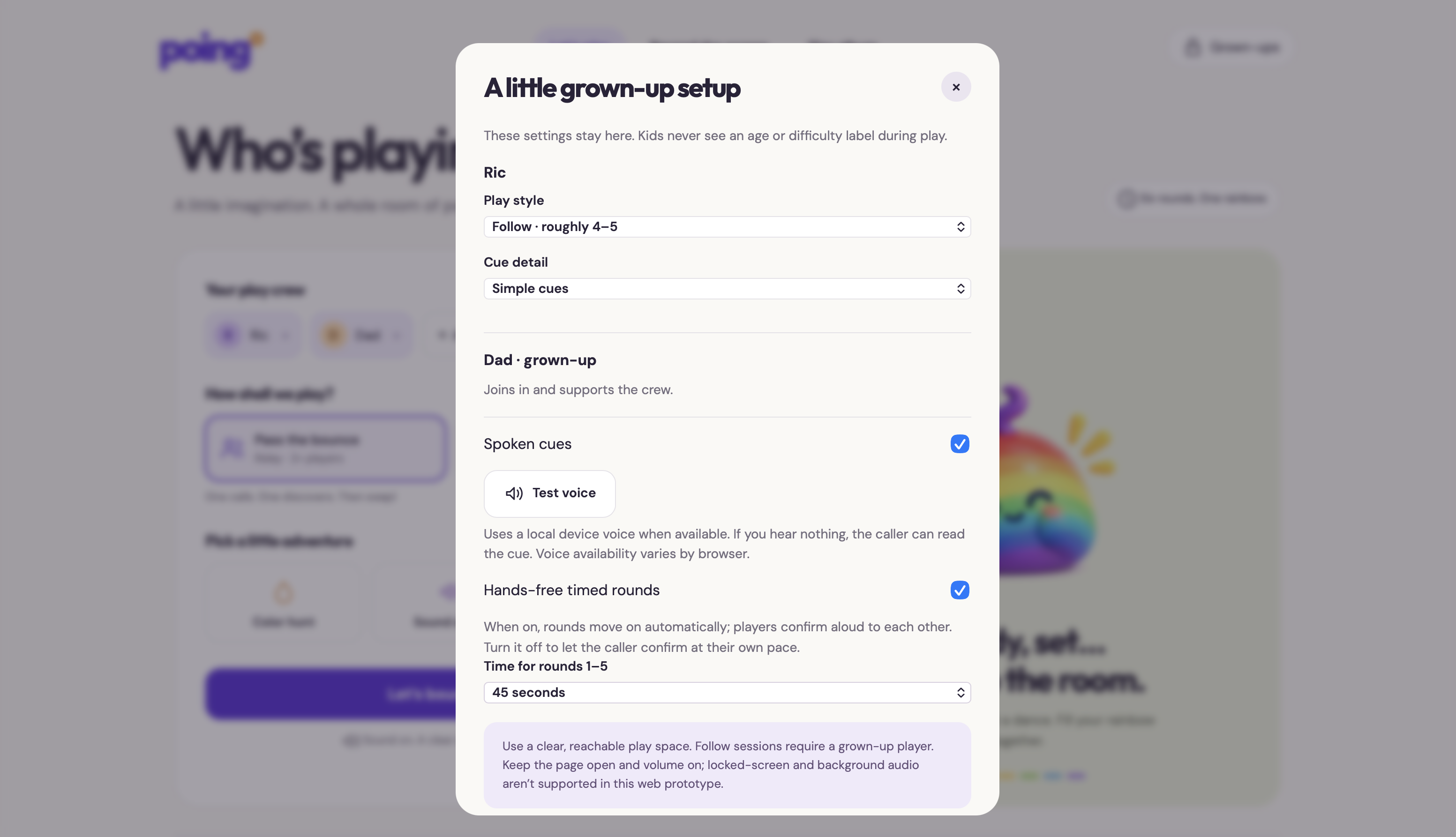
Adaptation belongs in the grown-up layer, not on the child.
Individual play styles and cue-detail settings let children of different ages share a session without visibly labeling one experience as easier. Spoken cues explain their own technical boundary too: a local device voice is used when available, otherwise the prompt remains readable on screen.
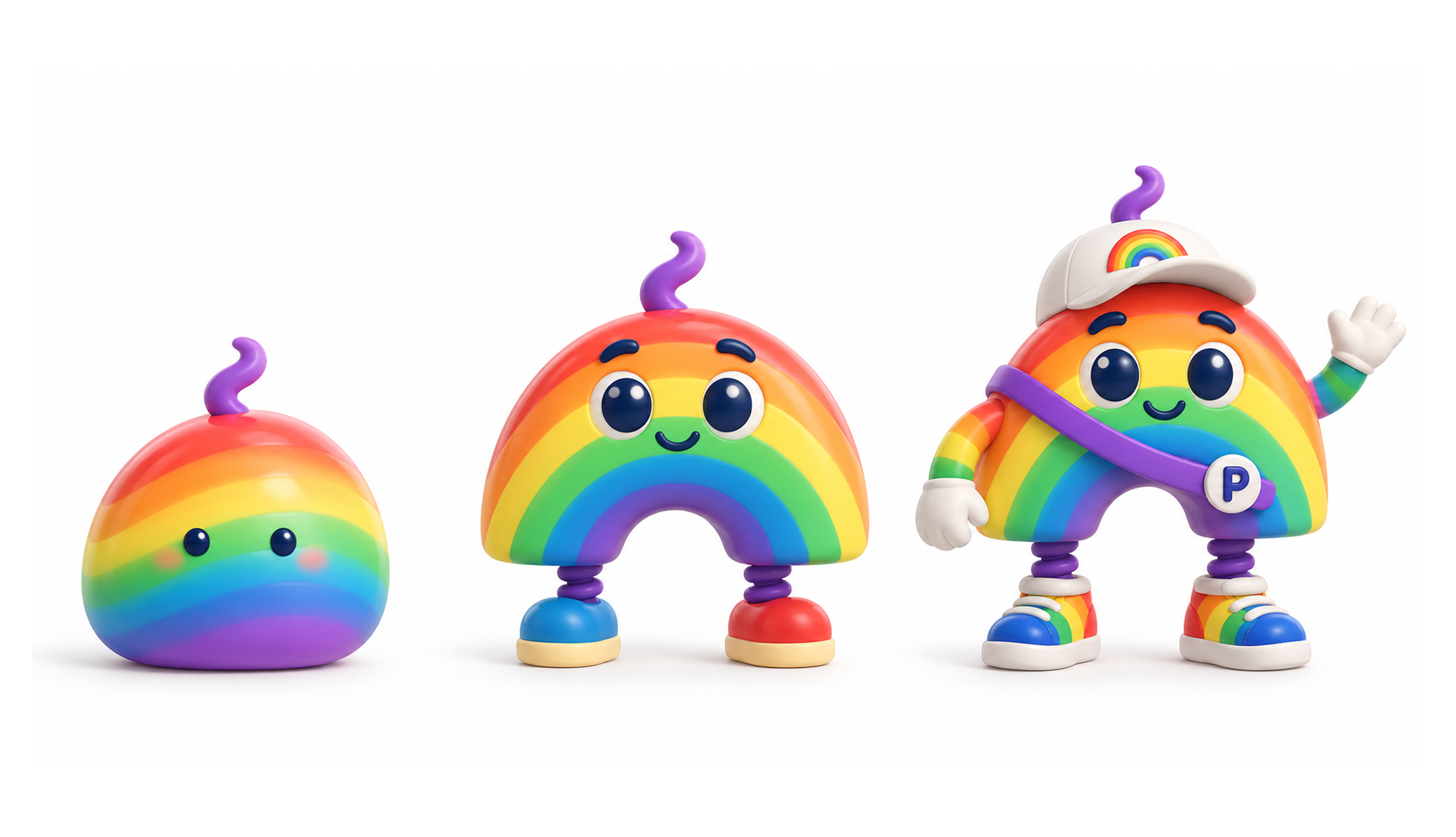
Hands-free advancement and configurable timing live in a clearly separated grown-up setup. Across the wider concept, three character stages shift the AI's role from directing play to handing over a toolkit as children gain confidence and independence.
06 · Honest boundary
A trustworthy prototype says what is working and what remains unproven.
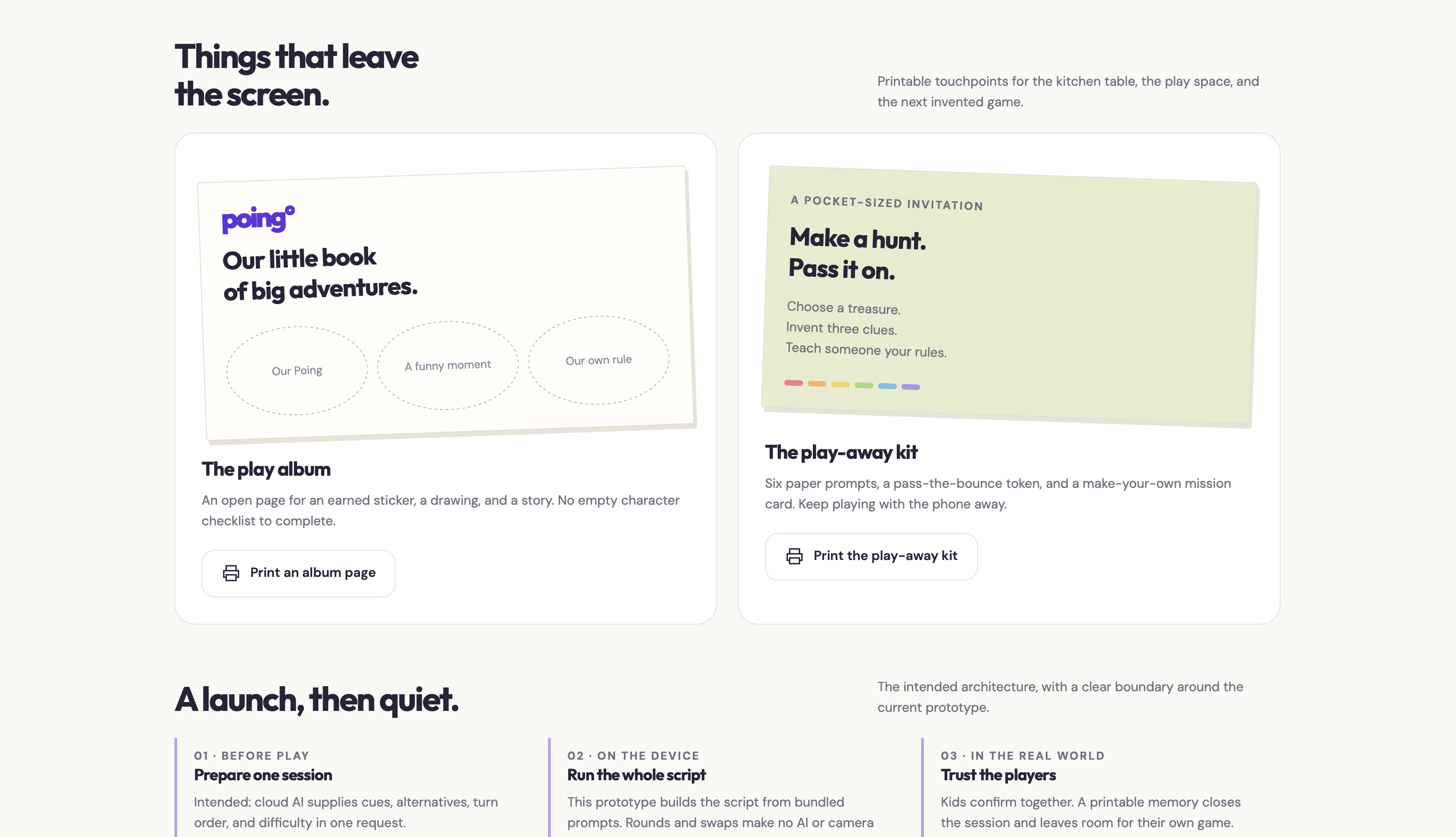
The current build runs the full experience with bundled prompts, local voice support, a persistent on-device album, printable keepsakes, and a paper play-away kit. It makes no cloud AI or camera calls, and it stores no child's creations in an account or remote profile.
It also refuses to claim that a running timer proves physical play. The offline-to-screen ratio remains a proposed measure, not a result. That leaves the important product question open for testing: can a screen that hands off and gets quiet reliably lead people into play together?